


No items found.
"The city often feels unfinished—constantly demolishing, rebuilding, migrating, adapting, and reinventing itself."
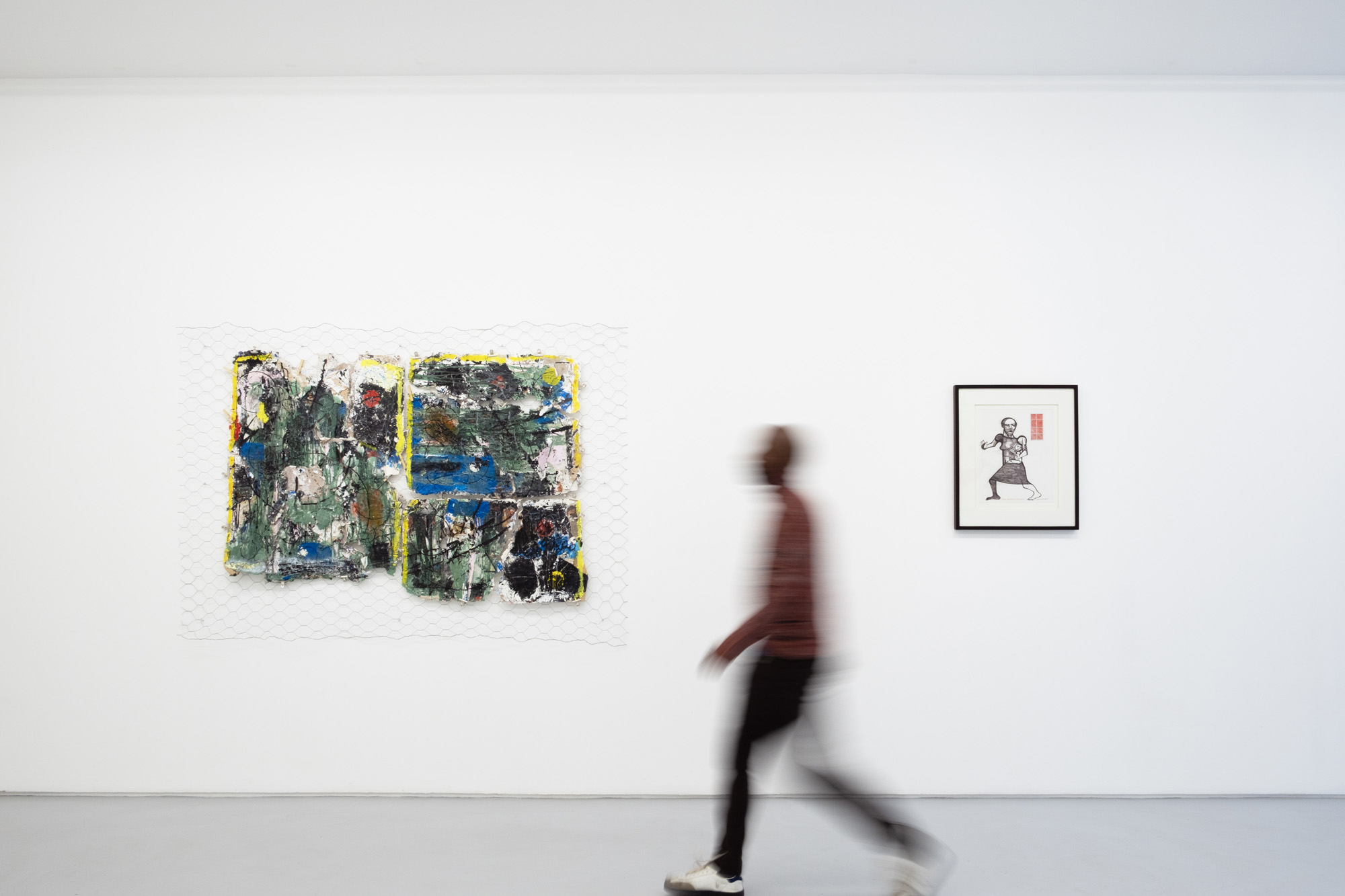
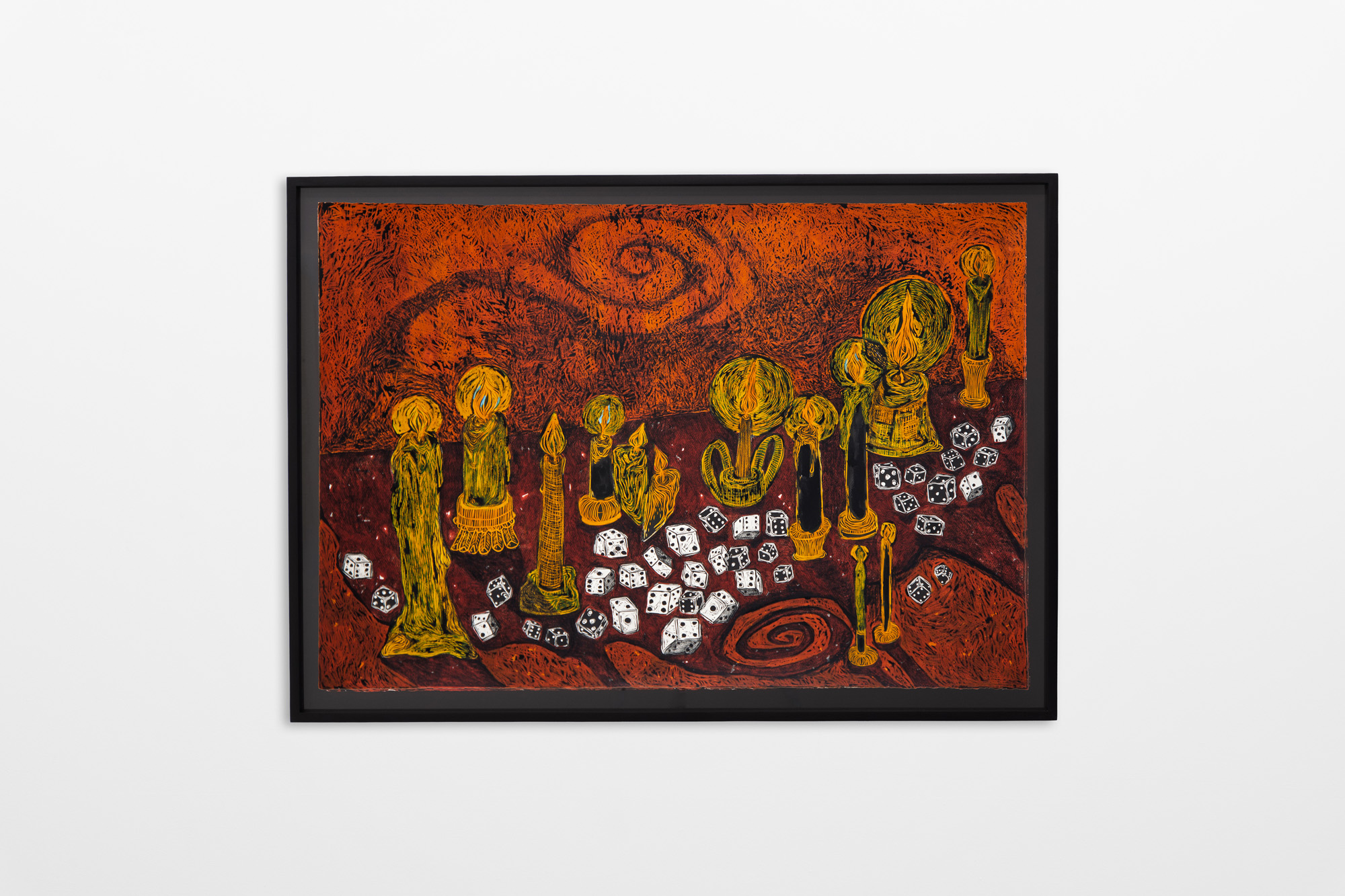
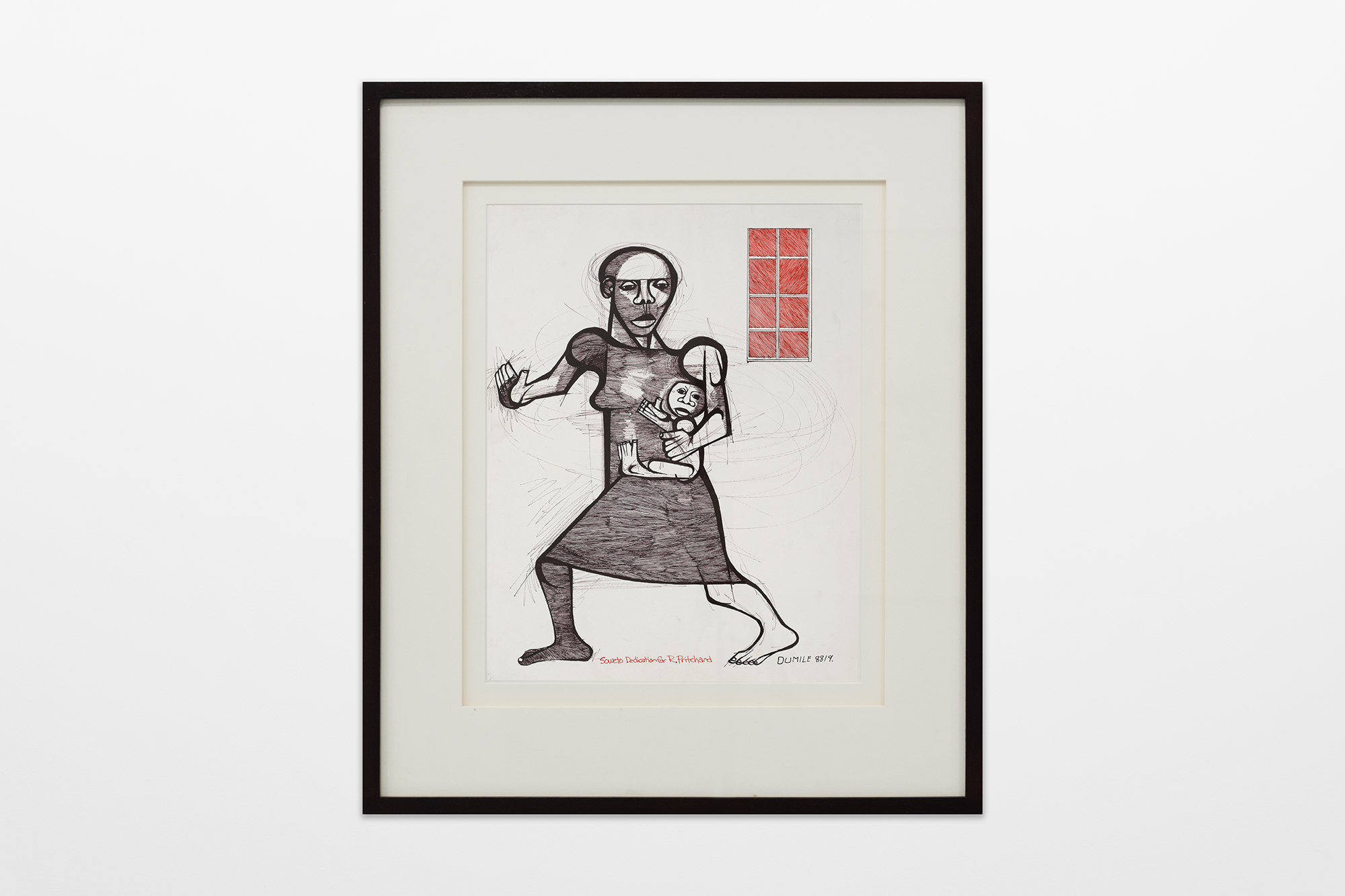
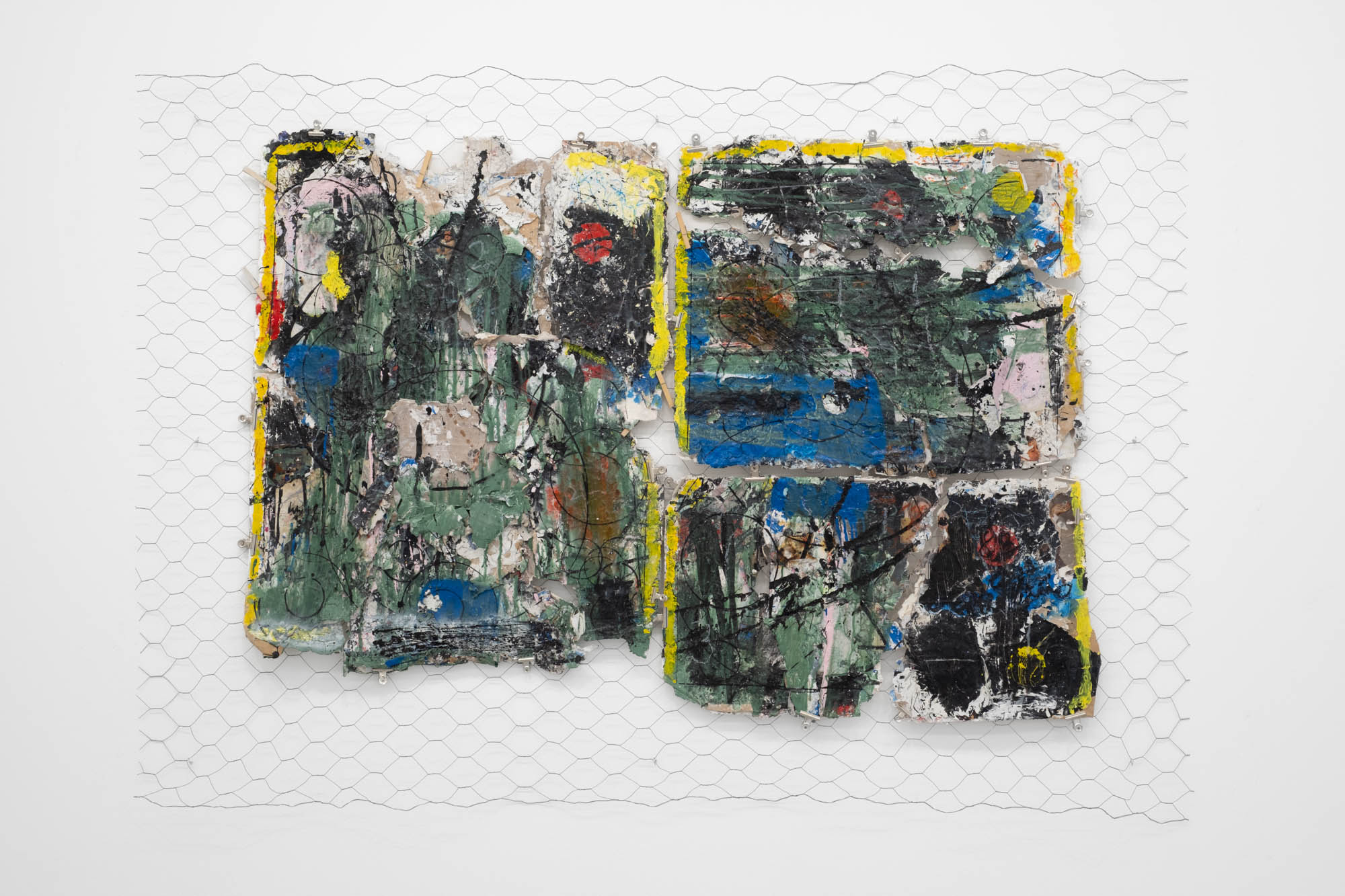
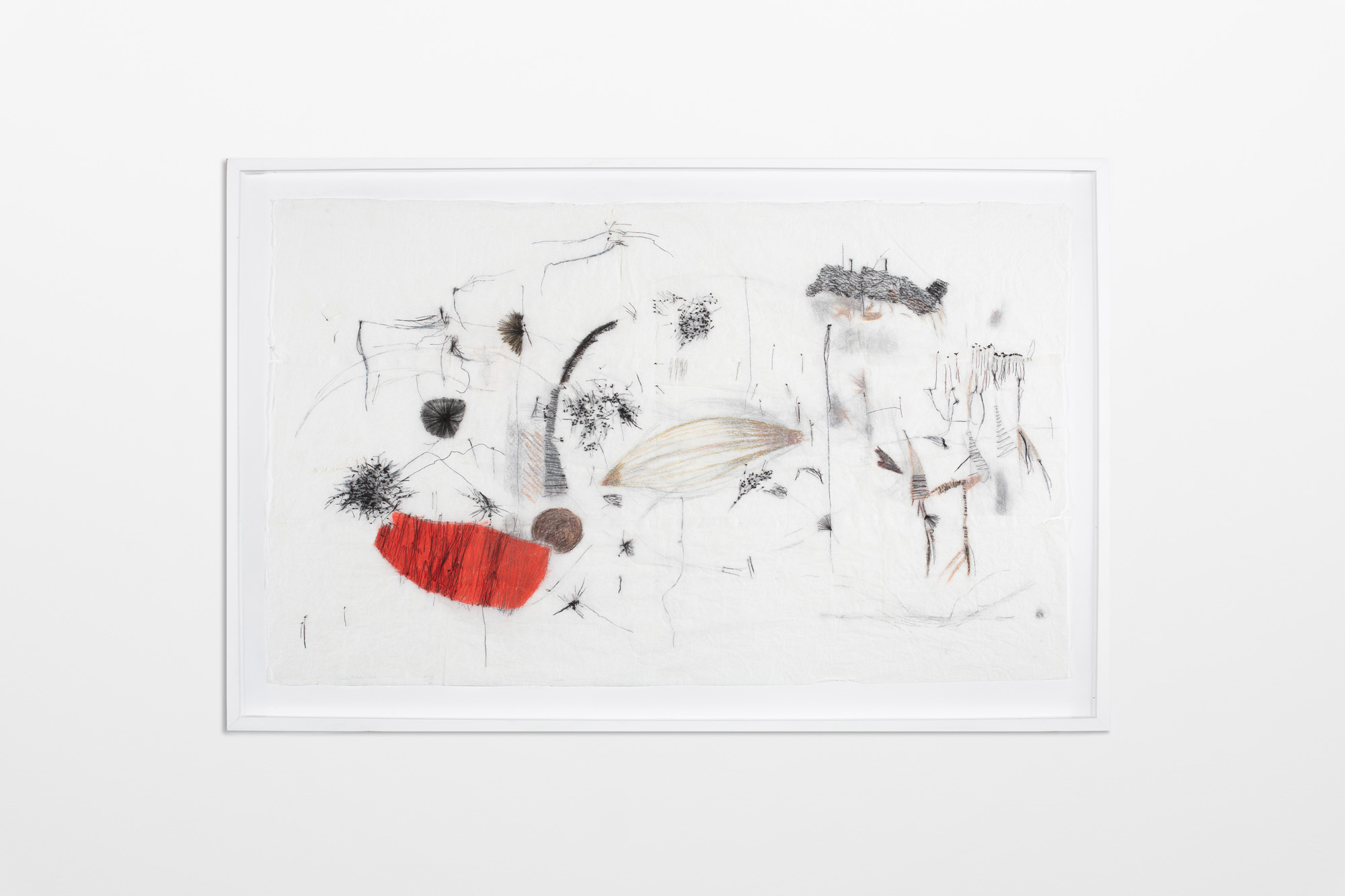
Vela Projects is pleased to present The Joburg Group Show. Emerging from a simple desire to engage with and celebrate Johannesburg from its sister city of Cape Town, the exhibition features work by Joburg-based artists Khanya Zibaya, Lady Skollie, Tzung-Hui Lauren Lee, Michael MacGarry, Nyakallo Maleke, Nthabiseng Kekana, Kay-Leigh Fisher, Chuma Adam, and Dumile Feni.
Read More
installation images



No items found.


featured artworks



.jpg)
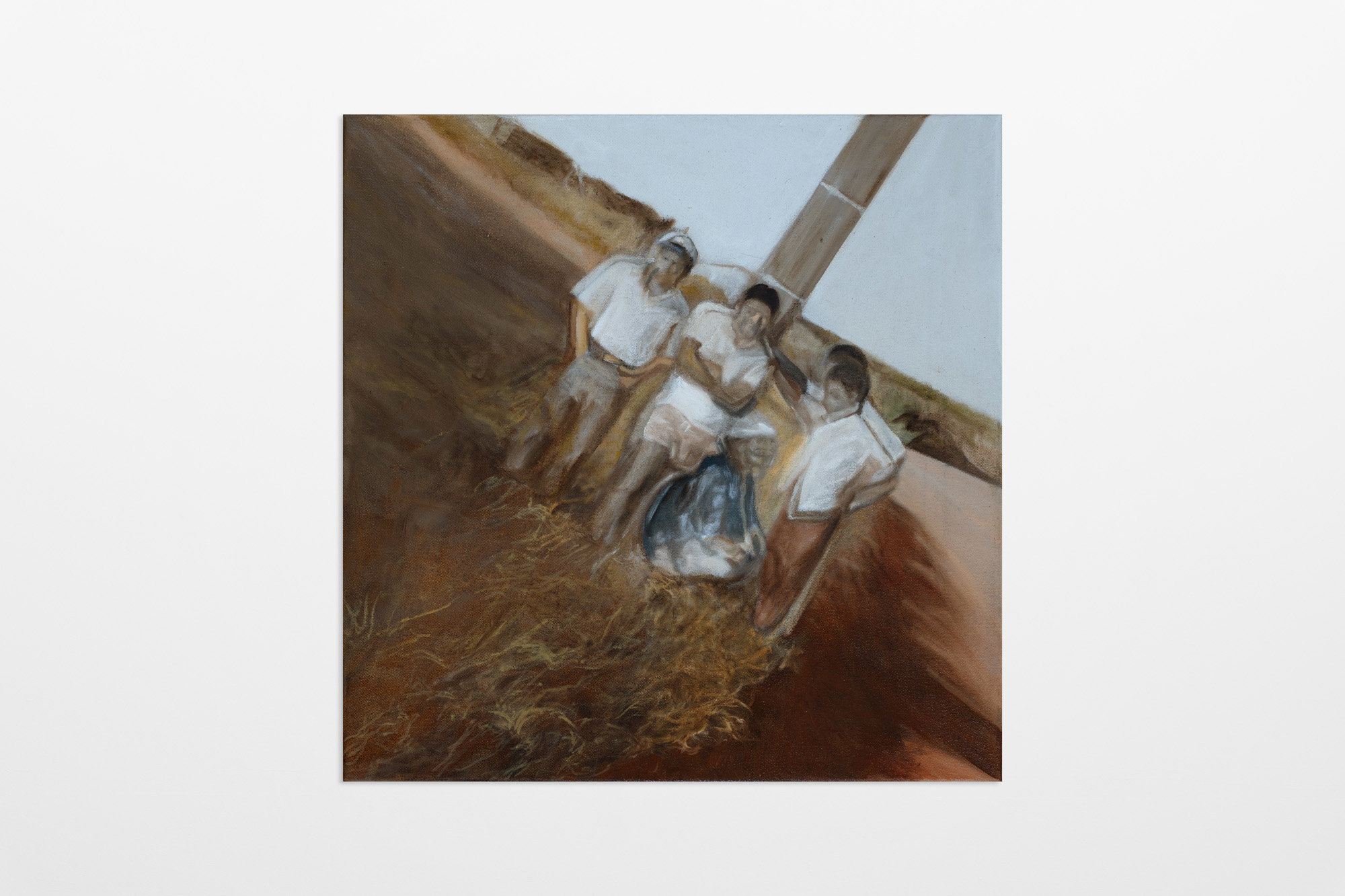
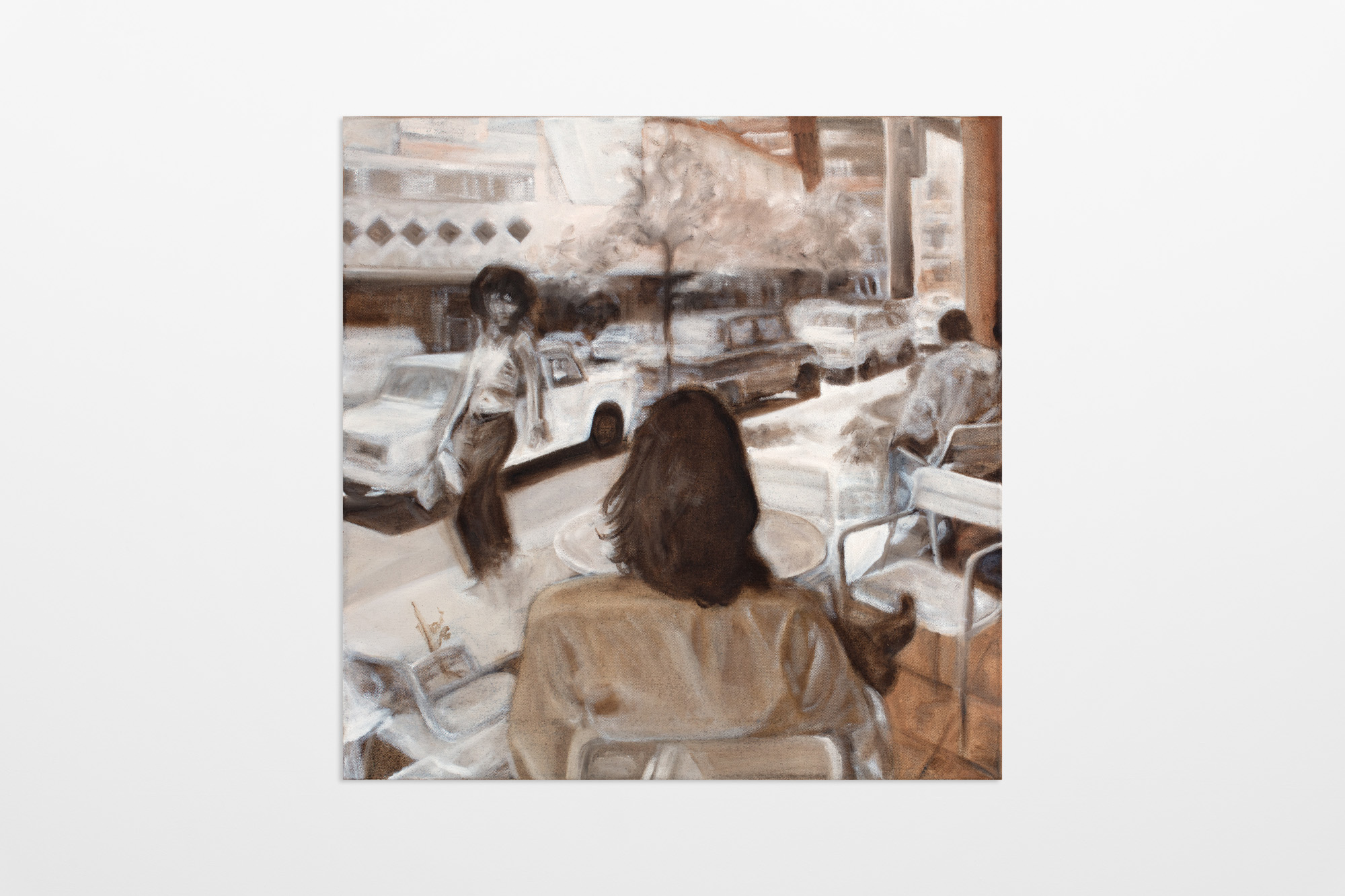
%2C2025%2C.jpg)
Watch
Biography
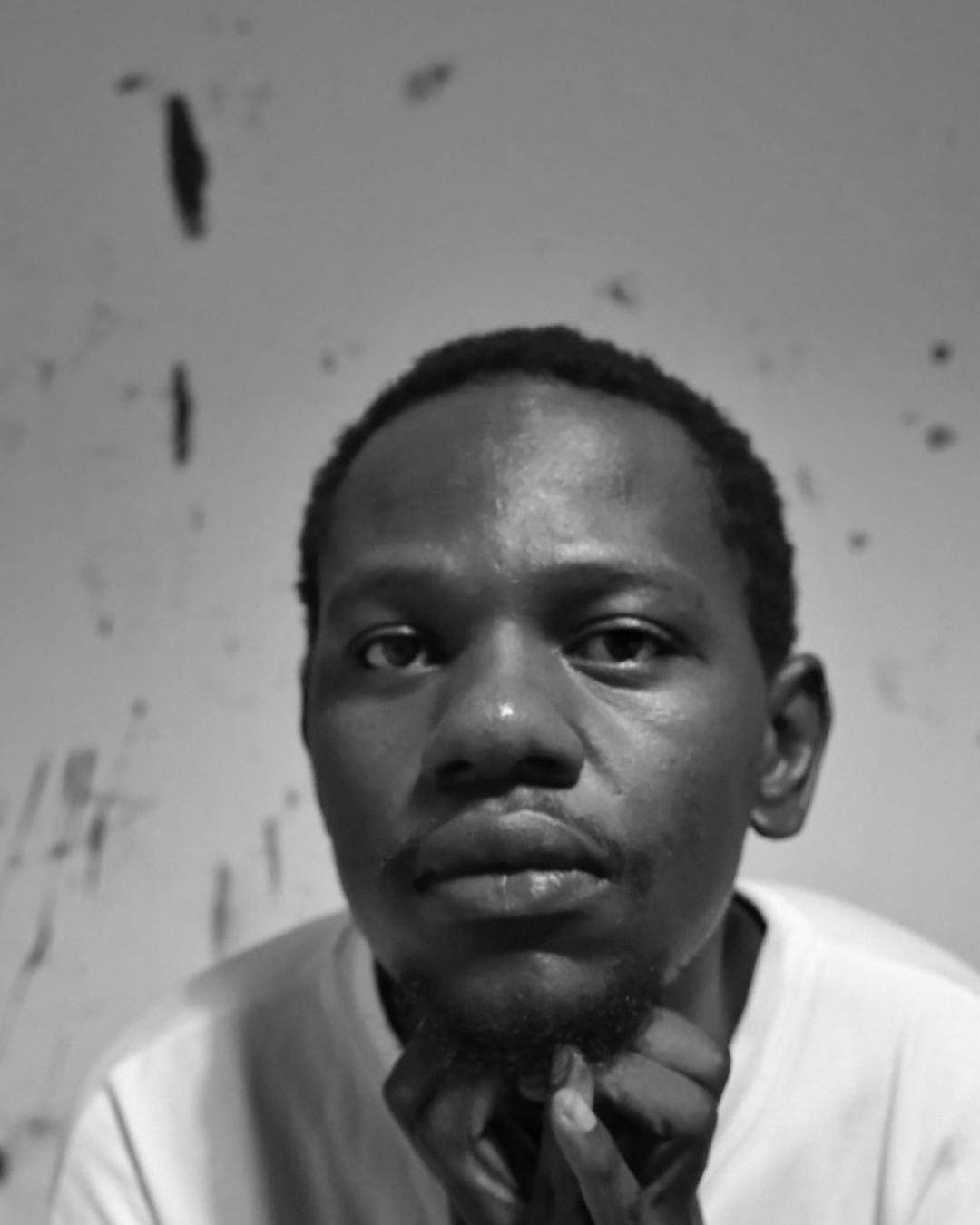
Khanya Zibaya is a multidisciplinary artist, born in a small village in the Eastern Cape. He now lives and practices in Johannesburg. Zibaya works with visual performance, experimental video work, experimental painting, sculptural, installation and photography. This also includes bodies and found objects to create contrast of realities.
Khanya has a keen interest in people reforming their relationships with the mundane. His work reflects an ongoing fascination with the fluid, often unexamined ways in which people both shape and are shaped by systems. This dynamic fuels his drive to create in innovative ways, bringing to light the persistent, often unseen patterns that linger within the familiar.
Through performance-based visual art, he invites people to see themselves reflected in what he terms “euphemisms of life.” By manipulating materials associated with the everyday violence of human behavior, he exposes these distortions, making visible the acts of those who perpetuate them.
For his work, he has been recognised by the National Art Festival Student Theatre Awards for Best Actor(s) and Best Writer(s) Award, 2019; Where The Leaves Fall Magazine, London, Winner, 2023; Photo Tool 10:10, Photography Presentation Workshop, 2023 ; LagosPhoto Portfolio Review, 2023; CAP PRIZE 2024, Shortlisted; Blessing Ngobeni Art Prize,Top 8 Finalists 2024 and Void x Futures Photography 2025 shortlist.
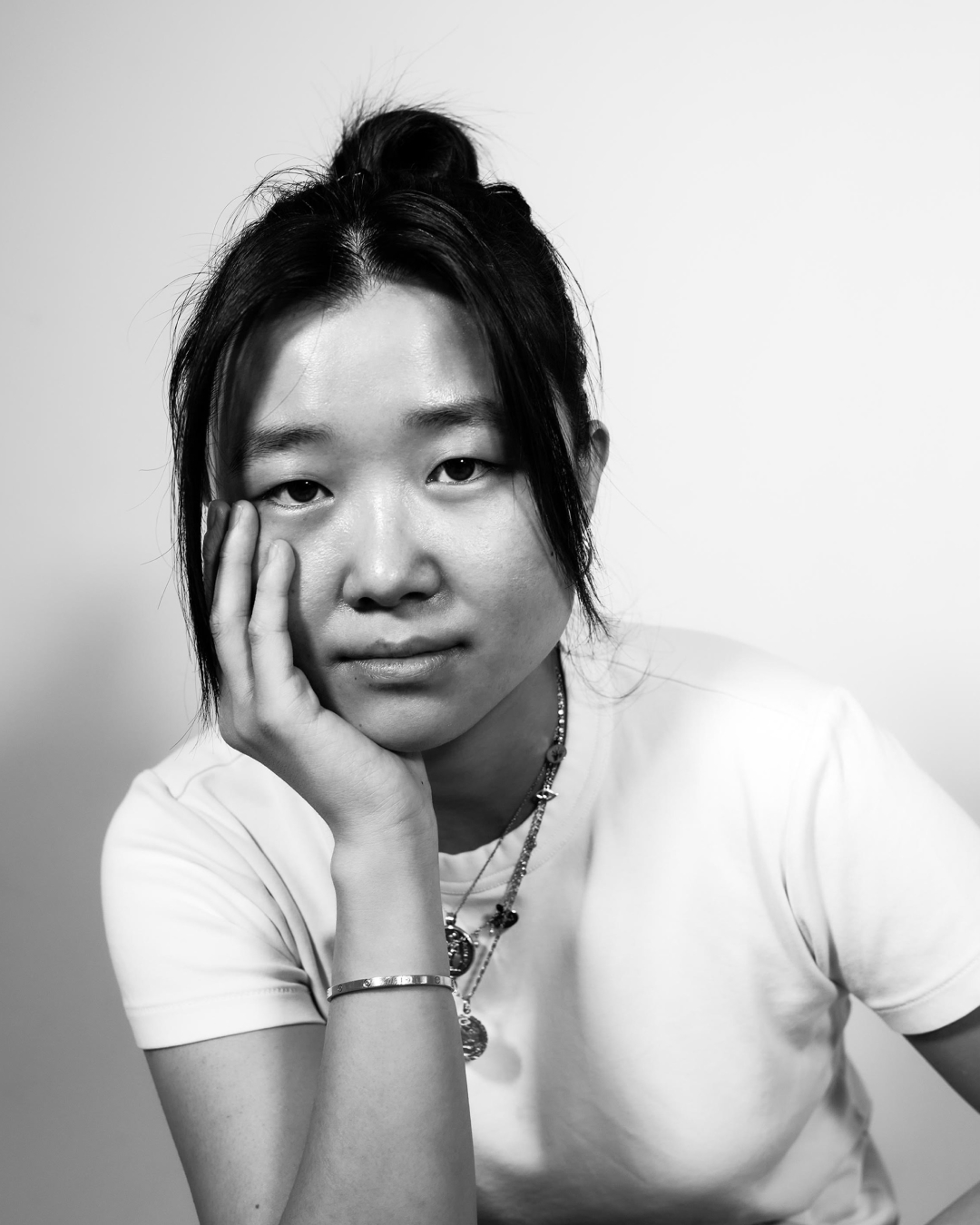
Tzung-Hui Lauren Lee (b. 1998, Johannesburg) graduated from the Wits School of Art in 2020. She has participated in several group exhibitions, including a duo show I hear you at BKhz Gallery (2023) and Oh So Quiet at Whatiftheworld (2023).
Her work has been featured at art fairs by Bubblegum Club Gallery (2022), FORMS Art Gallery (2022) and Vela Projects at the Investec Cape Town Art Fair (2026). She has participated in residencies with the Leipzig International Art Programme (LIA) and has created commissioned work for BMW Group and Heineken.
In addition to fine art, Lee also works as a set and costume designer. Most recently in 2025, graduated from an MFA in Scenography at The Royal Central School of Speech and Drama, London. Lee has designed several performances locally and internationally, working with The Centre For The Less Good Idea, Strangewife at Edinbrugh Fringe which received 5 star reviews and for Shakespeare’s Hamlet directed by Marcos Barbosa, that has recently completed touring in Portugal throughout 2025-2026, which will feature on National Portuguese broadcasts.
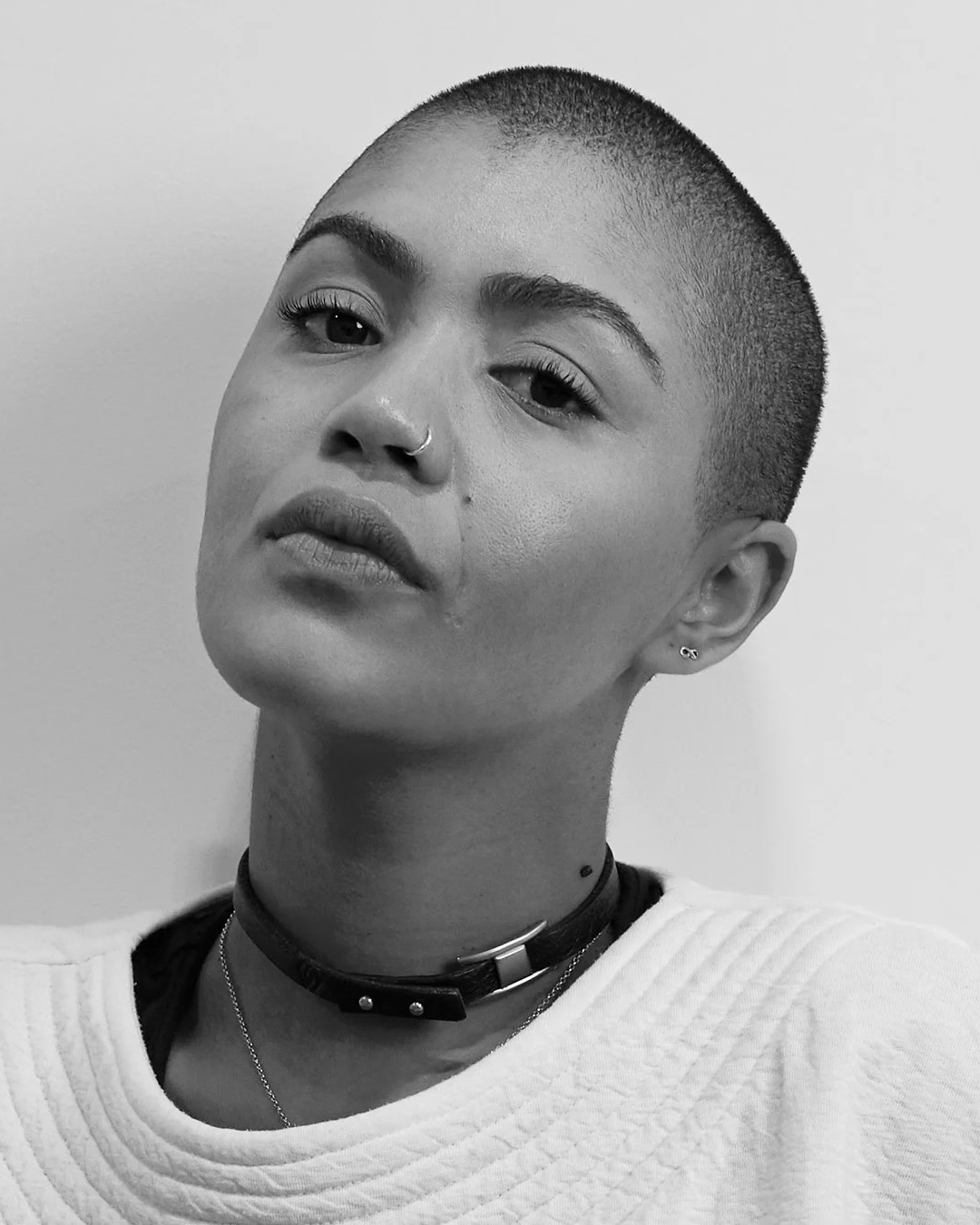
Lady Skollie was born in Cape Town. She currently lives and works in Johannesburg, South Africa. She describes her own work as ‘fire, ritual, Khoisan’, referring to the Khoisan indigenous people of southern Africa, who have lived in the region for thousands of years and to whom she connects the self-identifying ‘coloured’ community of South Africa – a multiracial group native to the area and distinct from the ‘Black’ and ‘white’ population.
Alive with emotional, political, sexual turmoil and loud questioning voices, Lady Skollie’s works depict relationships between godlike figures and flawed mortals singing, grunting, reflecting, gushing. She uses ink, water colour and crayon to defy taboos and talk openly about issues of sex, pleasure, consent, human connection, violence and abuse. Her work is simultaneously bold and vulnerable, expressing the joy and darkness of the erotic and the duality of human experience.
Skollie's practice has achieved national and international recognition. In 2019, she designed South Africa’s commemorative R5 coin celebrating 25 years of democracy. She won the prestigious FNB Art Prize in 2020 and received the Standard Bank Young Artist Award for Visual Arts in 2022. Her work has been exhibited at leading global institutions, including the Norval Foundation, Everard Read, and London's Tyburn Gallery.
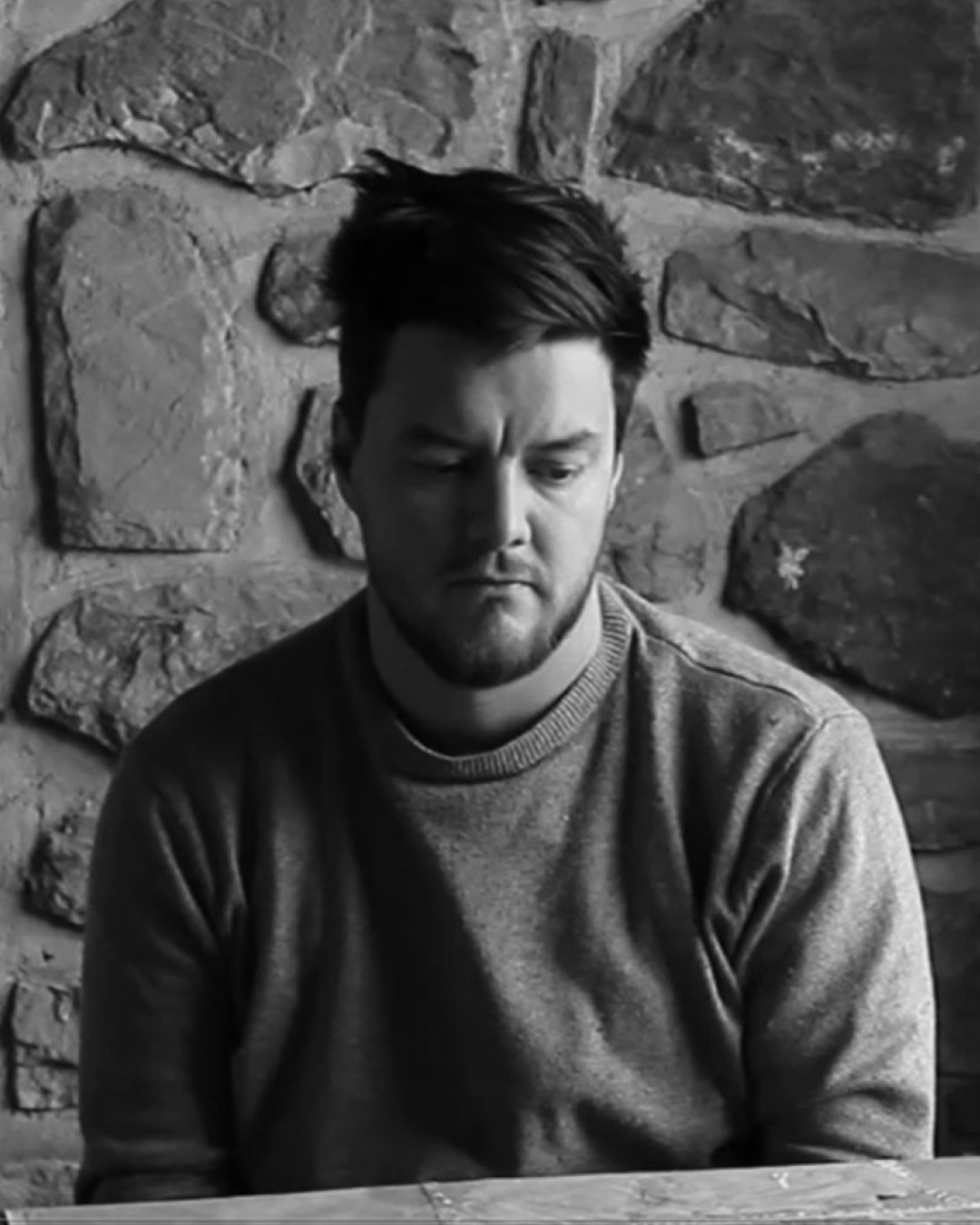
Michael MacGarry is a multi-award-winning visual artist and filmmaker based in Johannesburg. His work spans a diverse range of media, including sculpture, photography, installation, and film, addressing the complex tensions between marginalized and dominant narratives. MacGarry’s art reflects the ever-evolving landscapes of identity, power, and history, particularly in the context of post-colonial Africa.
He holds a Master’s Degree in Fine Art from the University of the Witwatersrand, is a fellow of the Gordon Institute of Performing and Creative Arts (GIPCA) at the University of Cape Town and a recipient of the Standard Bank Young Artist Award 2010.
His extensive body of work has earned him international recognition, with exhibitions at renowned institutions such as Tate Modern, Guggenheim Bilbao, and the Kiasma Museum. His diverse artistic practice has also extended to film, with several award-winning short films that have been featured in over 30 international film festivals. He is a recipient of an El Ray Award - Excellence in Narrative Short Filmmaking (Barcelona Film Festival 2015), a finalist for the Huysmans Young African Filmmaker Award 2015 (Belgium) as well as Jury Awards from 19th Video Brasil (Sao Paulo), K3 Internationales Film Festival (Austria) and 13th International Festival Signes de Nuit (Paris).
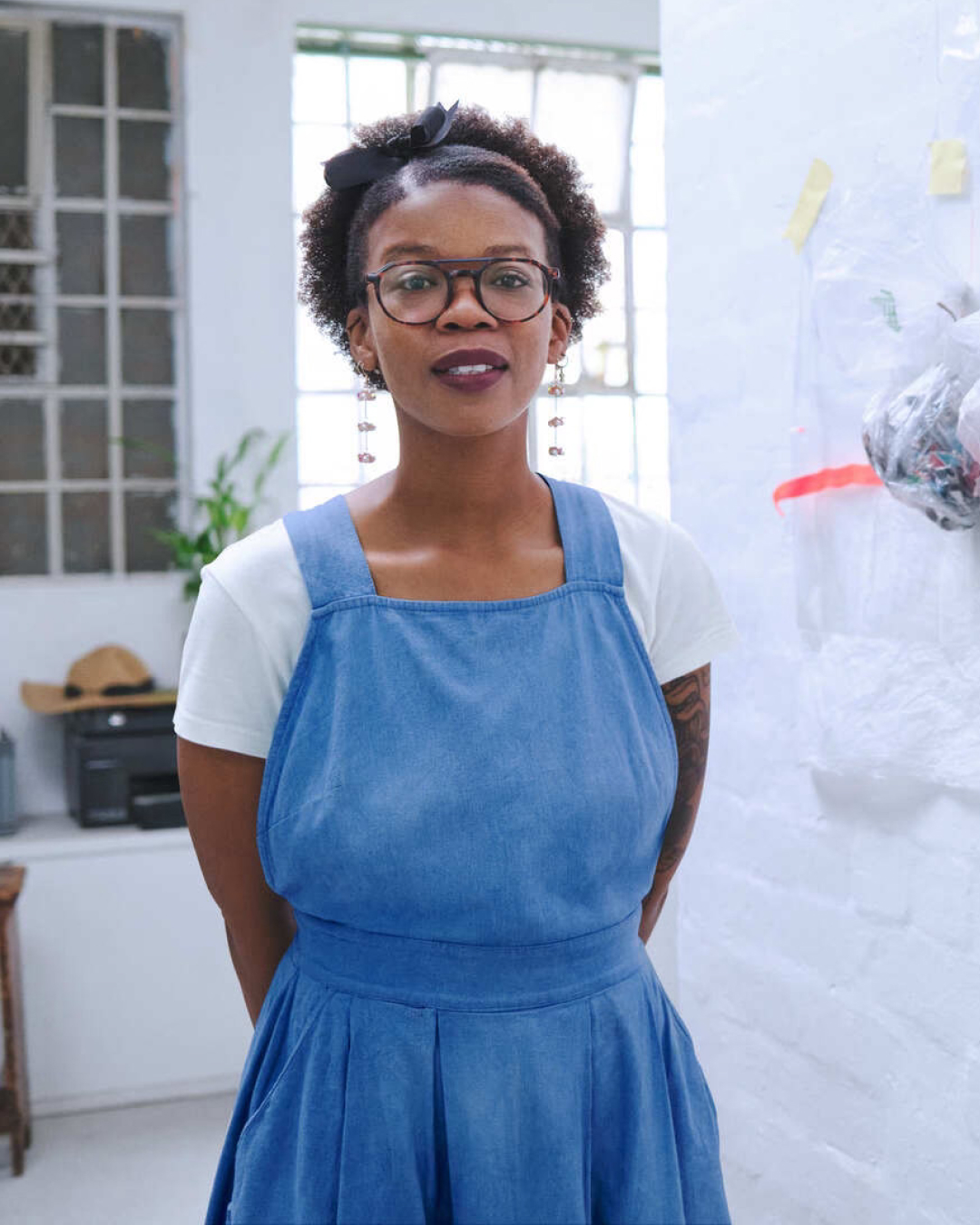
Nyakallo Maleke is a Johannesburg based artist and writer. Maleke’s works span installations, performances, sound pieces, prints, and sculptures, often combining traditional drawing with meticulous embroidery-like stitching and unconventional materials like wax paper.
She holds a Master of Arts in Public Sphere (with distinction) from École de designet haute école d'art du Valais, Switzerland (2019), where her research focused on migration, vulnerability, and public space. Maleke also earned a Bachelor of Fine Arts from Wits University (2015) and is currently pursuing an MA in Creative Writing at the University of the Western Cape.
Maleke is the recipient of the Standard Bank Young Artist Award (2025). Her second solo exhibition, To Teach in Ways That Teach Us To Care For The Soul (2025) was shown at the National Arts Festival. Maleke presented at the 2025 UCT Postgraduate Regional Conference “Margins and (Un)Belonging”, where she presented an experimental text titled, Drawing from the Bones: Collective Mourning and the Repurification of Space and Humanity.
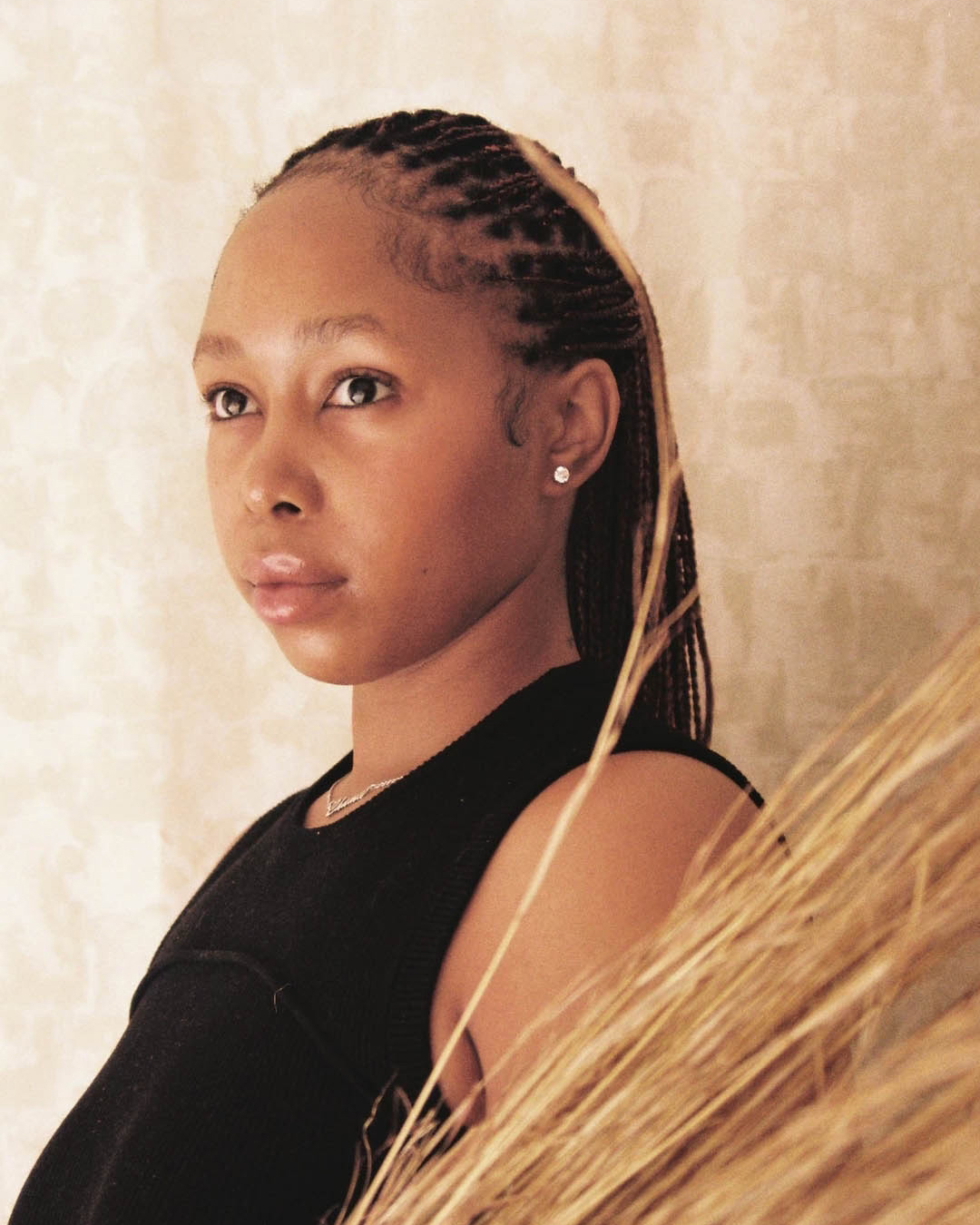
Chuma Adam is a Johannesburg based multidisciplinary artist whose work spans painting, printmaking, textiles and drawing. Her work, born out of explorations into the material-discursive and psychic dimensions of Blackness and womanhood, is acutely critically engaged.
Adam notes that, institutionally, Blackness is often explored through imperial lenses which colonise and devour attempts to self-determine, relegating them to a kind of oppositional thought rather than a truly auto poietic emergence. Her work stands outside of this dynamic. Drawing from the distant past and potent futures, to Adam, Blackness is not a relationality to whiteness, but rich and complex structure entirely produced and reproduced on its own terms.
Adam engages material and cultural situatedness in her identity as a Xhosa woman, often making use of soil from her mother’s garden, and producing works on umbaco: adense cotton material that is used to make traditional Xhosa garments. Working through intense and demanding feelings in her psychosomatic practice, her emotive and controlled brushstrokes create immersive encounters. An infinite sea of marks consume umbaco, resulting in a viewing experience that moves beyond legibility and encourages a kind of non-comprehension.
Chuma is an Honours graduate from the School of Fine Arts at the University of the Witwatersrand and twice shortlisted for the Wits Young Artist Award (2023,2024).
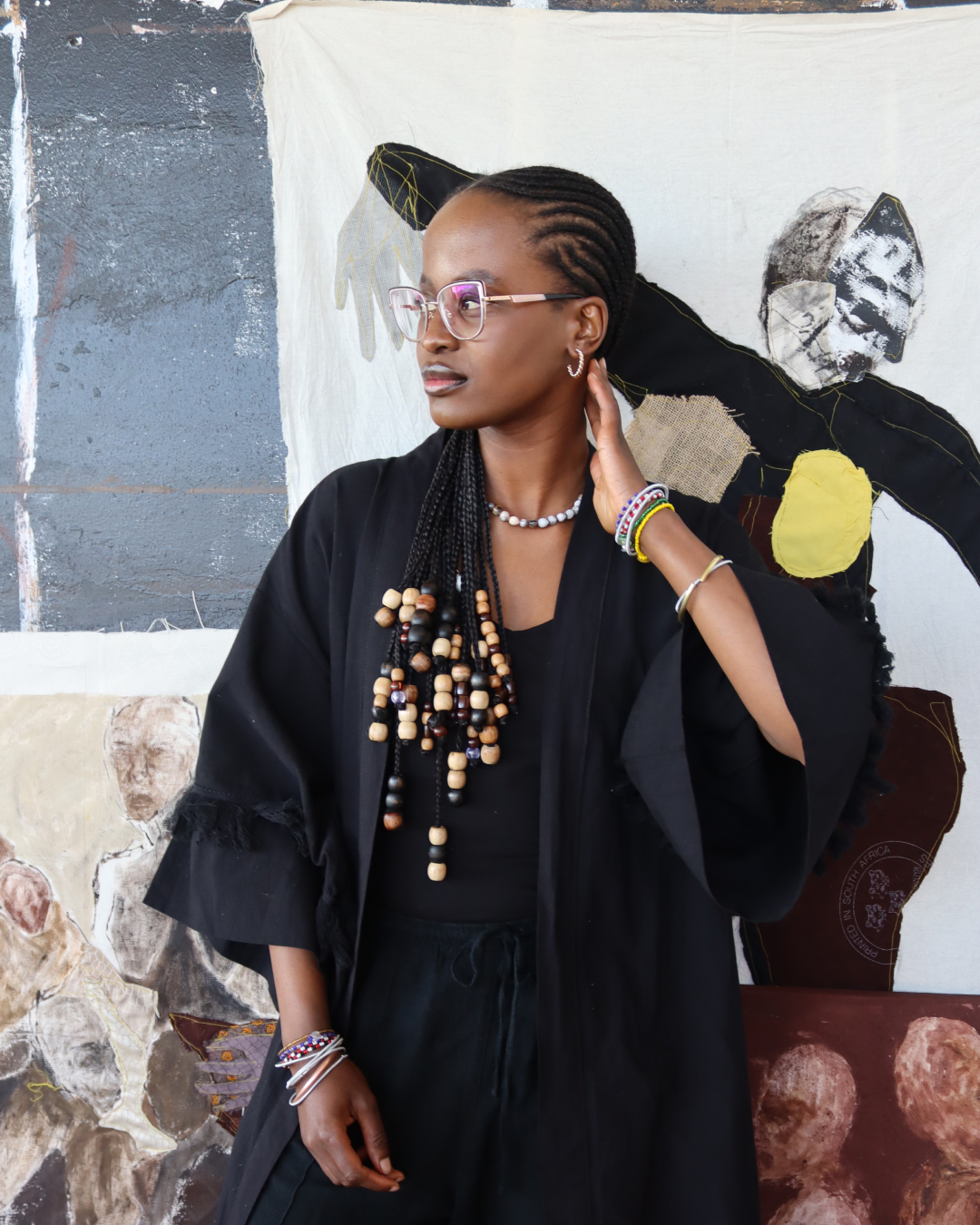
Nthabiseng Kekana is a South African artist raised and currently based in Alexandra, where she lives and maintains her practice. Her engagement with art began in early primary school, where she developed an interest in drawing. She later attended the National School of the Arts, majoring in Three-Dimensional Design.
Kekana remarks: “A recurring material within my work is raffia, a natural fibre that operates both formally and conceptually. It becomes a connective thread both literal and symbolic facilitating a dialogue between the conscious and subconscious and evoking the cyclical nature of existence. My influences are manifold, with the subconscious serving as a vital conduit through which ancestral knowledge and spiritual guidance understood as emanating from Ramsedi (God) are accessed and translated into visual form.”
Kekana’s work has been exhibited internationally, including in France, and is held in private collections across London and the United States. She was shortlisted as one of four finalists for the 2021 Cassirer Welz Award, presented by Bag Factory Artists’ Studios in partnership with Strauss & Co Fine Art Auctioneers. In 2022, she was named among the top six finalists for the Blessing Ngobeni Art Prize, and in 2023, she was awarded the Makwande Art Residency in Nice, South of France. Most recently, she debuted her first solo exhibition at the FNB Art Fair in 2025.
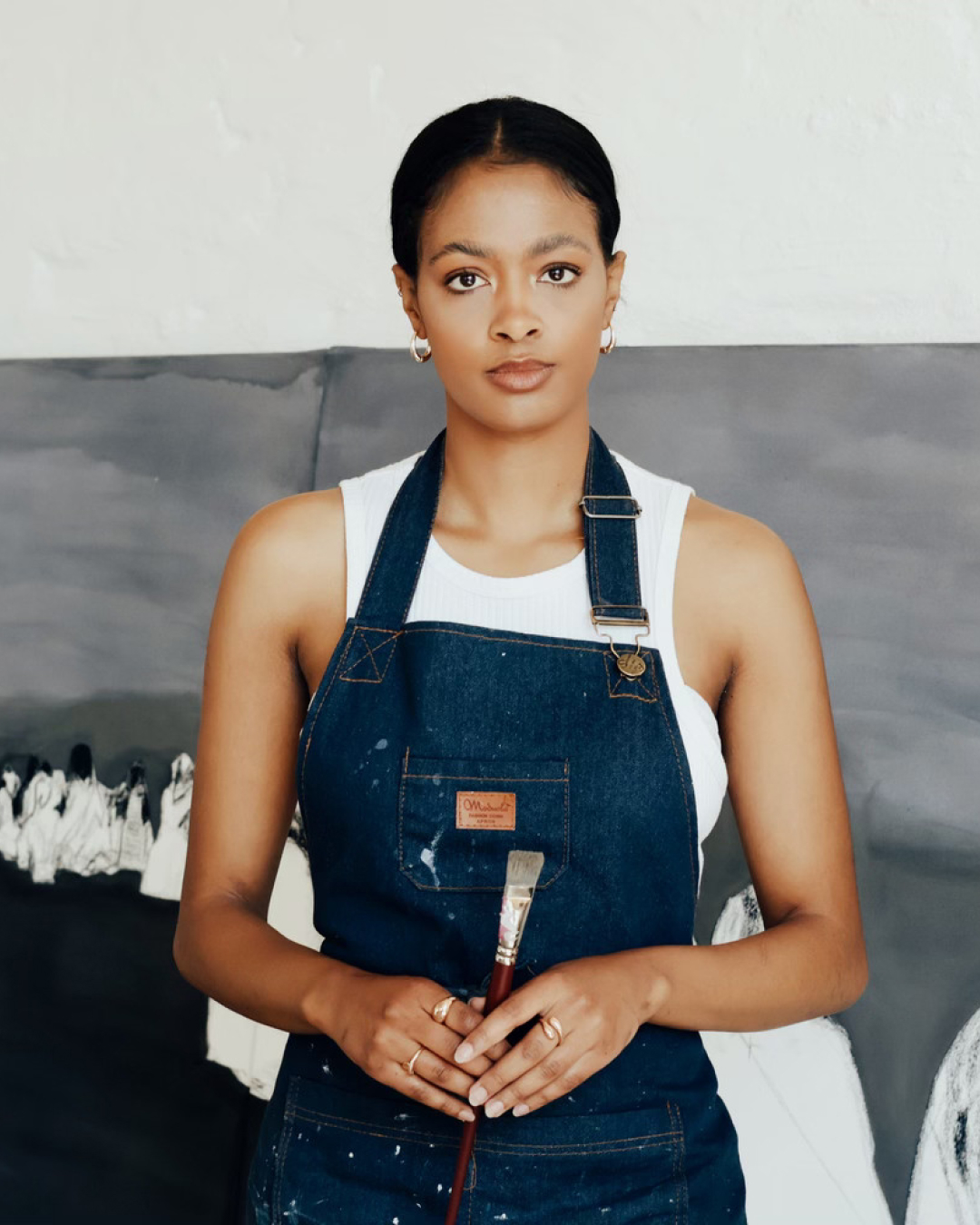
Kay-Leigh Fisher is a visual artist, curator and publisher based in Johannesburg, South Africa. Her research and practice focuses on themes and narratives of becoming, thinking through familiar relationships with objects and how they reinforce ideals around racial and gendered identity.
By examining the intersection of material culture and identity politics through archives of photography, performance and contemporary art, her work represents a departure from ideal portraiture through the lens of multiplicity. Her work aims to challenge the norms of gendered and racial identity as they have become embedded in our daily lives.
She holds an Honours in Curatorship degree from Michaelis School of Fine Art, University of Cape Town (2020) and a Bachelor’s Degree in Fine Arts from the University of the Witwatersrand (2019). Fisher was a co-recipient of the Bag Factory Artist Studios Young Womxn Studio Bursary (2022- 2023) and works full time as a Programme Associate for the Joburg Contemporary Art Foundation (JCAF).
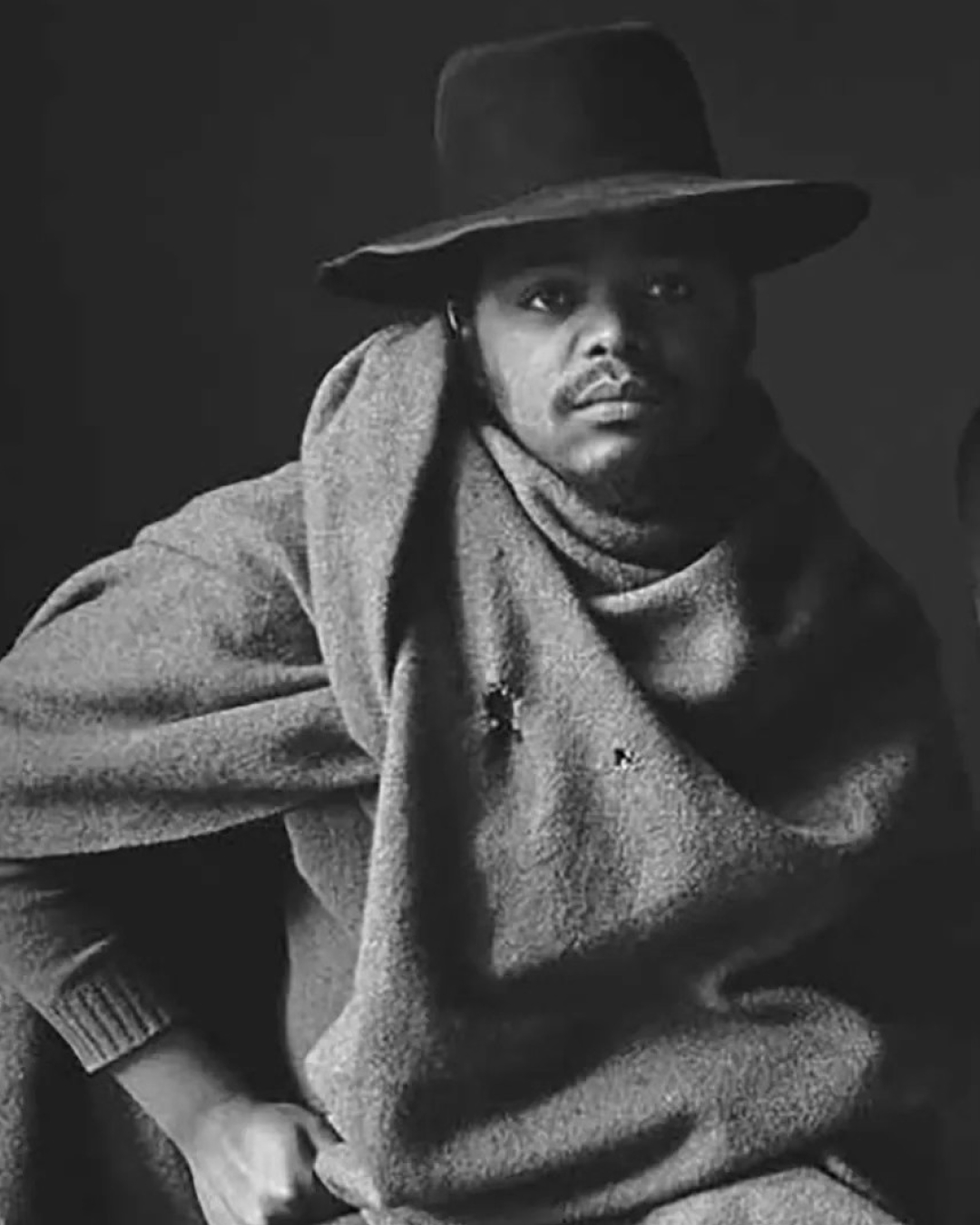
Zwelidumile Geelboi Mgxaji Mslaba “Dumile” Feni was born on 21 May 1942 in Worcester, Western Cape. His mother died when he was only five or six years old and he went to live with relatives in Cape Town until the age of eleven. He then began working for his father, a trader and preacher.
He began his artistic career by painting and decorating hospital walls while a patient at the Charles Hurwitz South African National Tuberclosis Association (SANTA) Hospital in Johannesburg while working as a sculptor apprentice at a Johannesburg-based plastics foundry. Together with Ezrom Legae, he decorated numerous walls in the hospital.
Two years later, in 1967, his artwork was selected to represent South Africa at the São Paulo Biennial. Feni opted to go into exile in London in 1968 after being harshly criticised for agreeing to represent the apartheid regime and violating the pass laws that restricted free movement at the time. Known for his intensely evocative imagery, he mostly created monochrome drawings, paintings, and sculptures. Feni then started attending the Jubilee Art Centre in Johannesburg, where he was taught by another CCAC artist, Cecil Skotnes. The intensity of his paintings earned him recognition, and in 1965, he was dubbed the "Goya of the Townships" and granted professional assistance by Gallery 101 in Johannesburg.