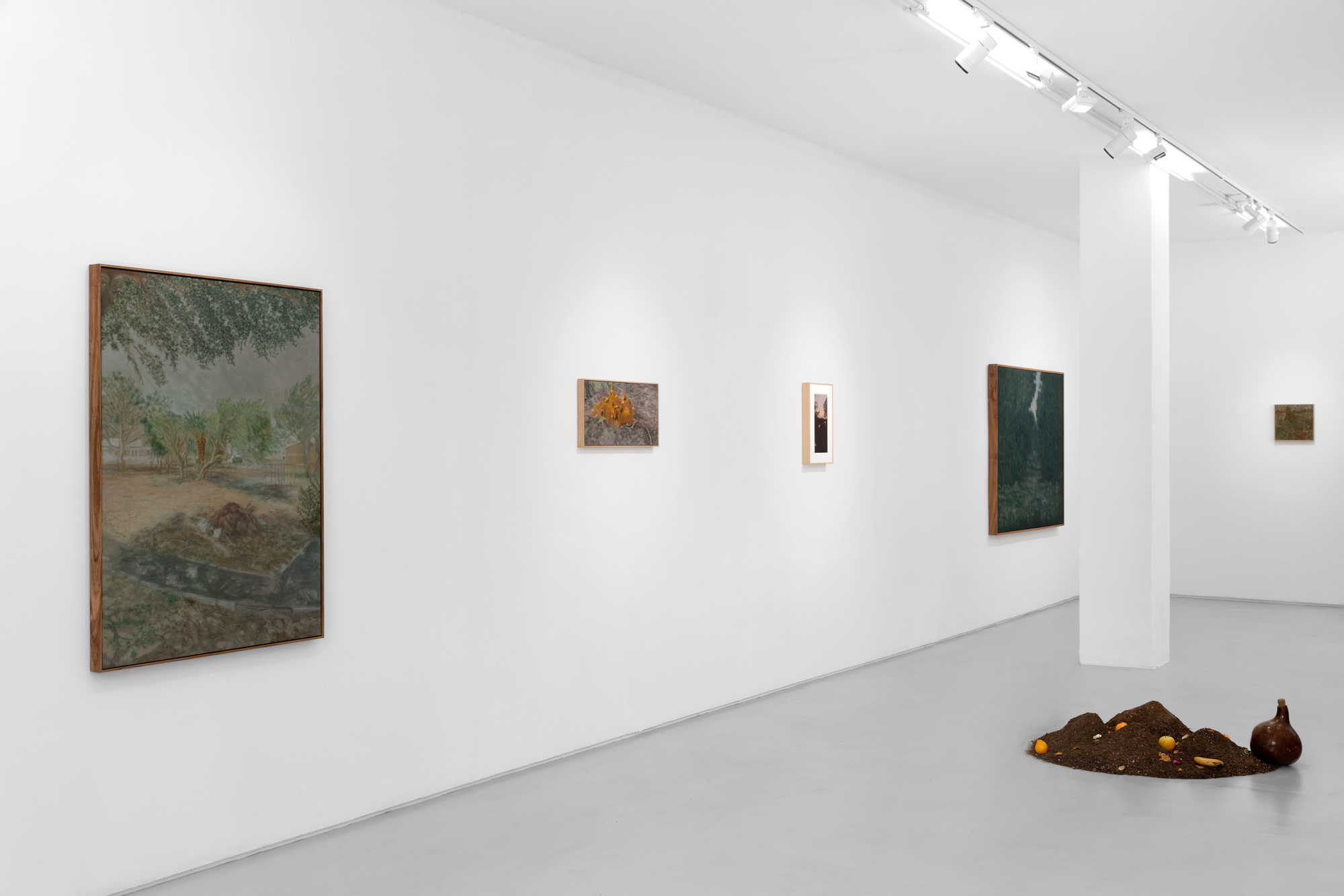
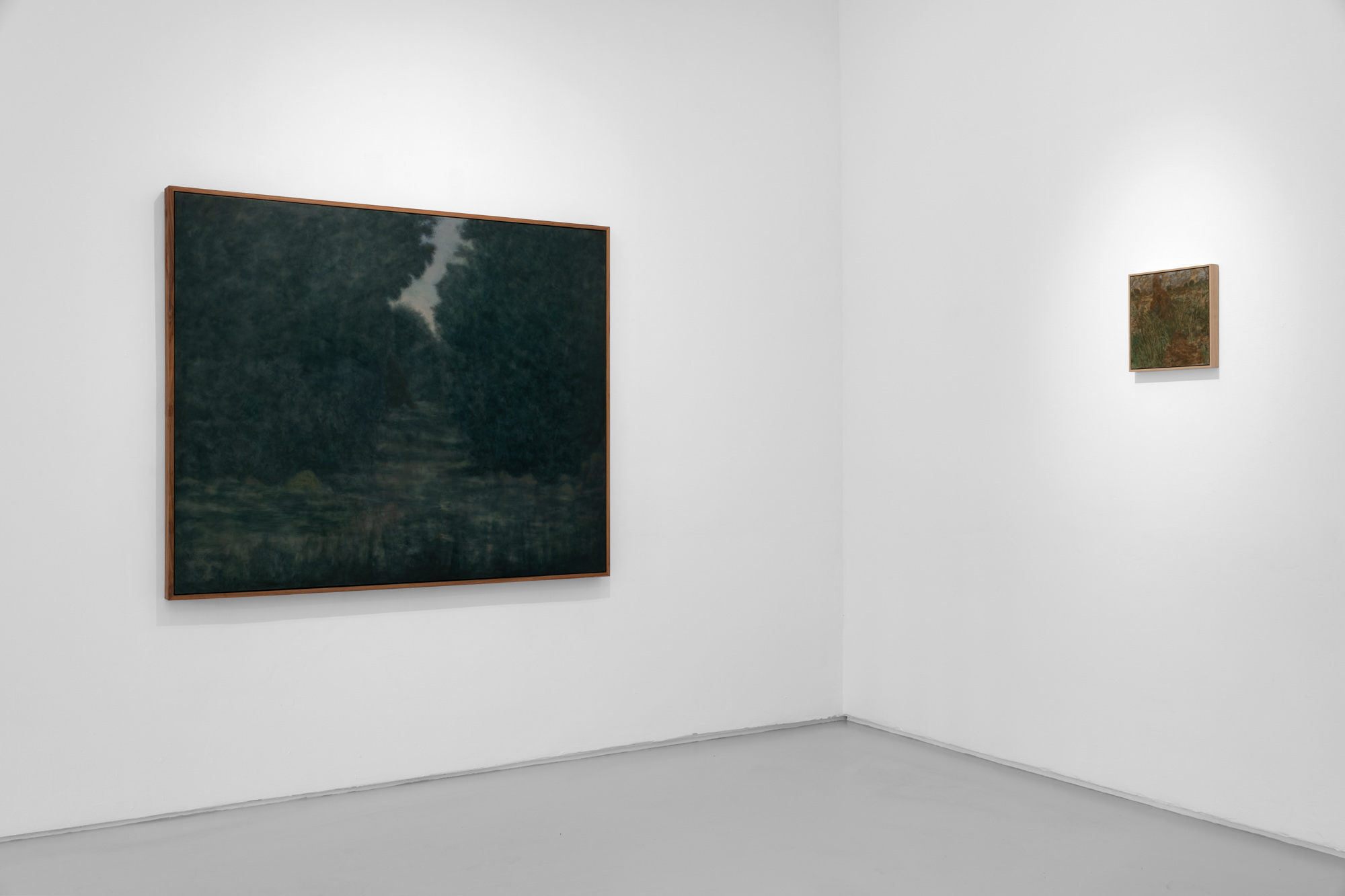
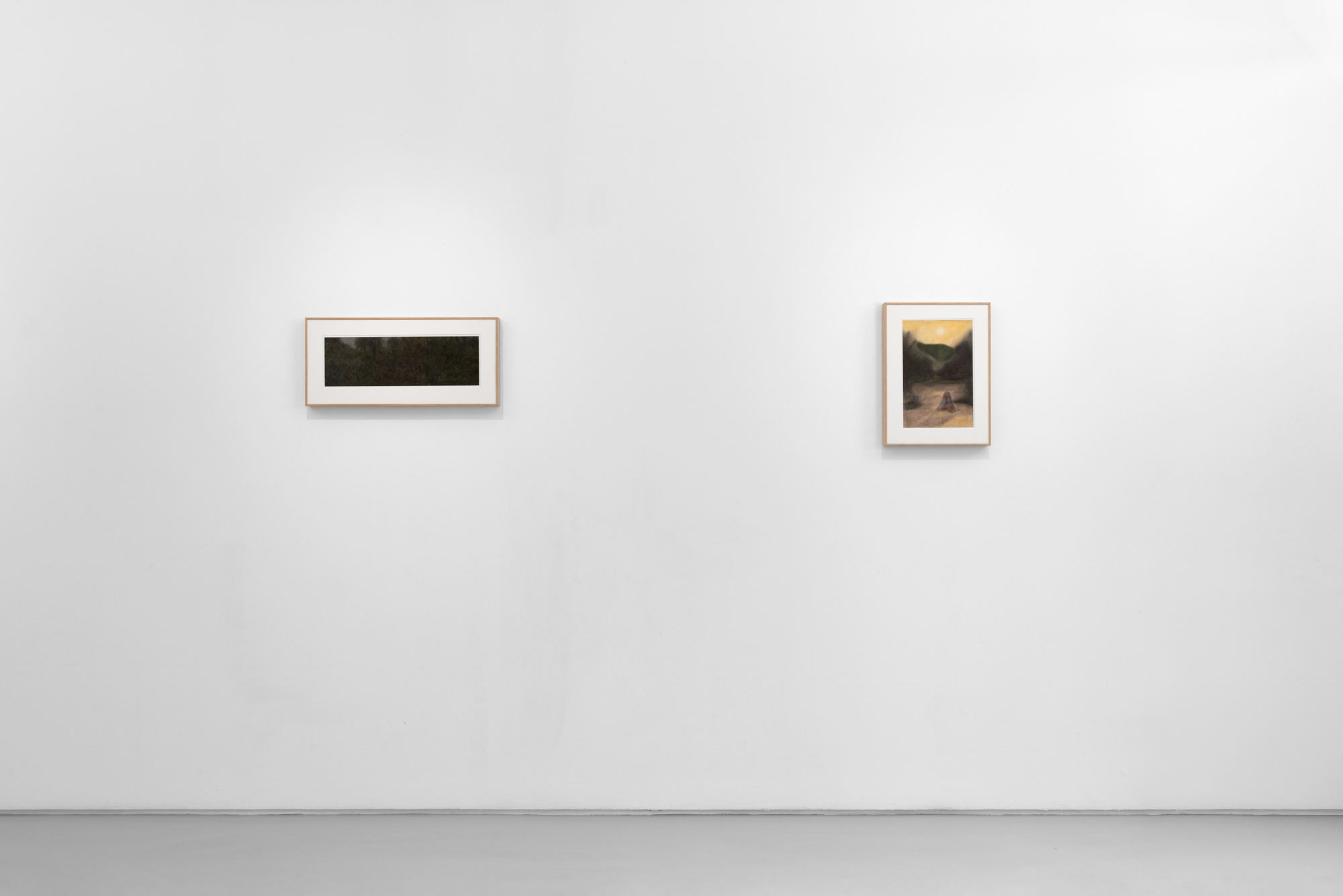
Vela Projects is proud to present Iya embovaneni vila ndini, Songezo Zantsi's third solo exhibition with the gallery.
The title, drawn from a directive the artist carries from his grandfather, translates loosely as: "Take heed, you lazy fool, and witness the exemplary labour of the ants." For Zantsi, this saying has become an internal compass, one that has shifted from memory to action. "I've been carrying it over the years without me knowing," he reflects. "But now, remembering it and finding myself acting on it, it [has] begun to hold a different significance. I have found myself carrying the idea and bringing it into life, and then, eventually and in turn, it has carried me, leading me or guiding me where I should go."
Self-representation, for Zantsi, is a vital act rooted in memory. "I think about remembering, I think that's the starting point," he explains. "Remembering such words I was raised with. Remembering like, okay, this far, what has built me."
In this new body of work, Zantsi follows his grandfather's directive to observe the world from a different vantage point; that of the ants. Through experimentation and research he translated the saying into a visual language while remaining careful not to be literal. "So as a figurative painter, I wanted to merge the two, the landscape and the figurative."
The result is a series of works that feel discovered rather than composed. Zantsi's process began with imagining terrain to gather a figurative vocabulary of earth, light, and shadow. From these imaginings, he builds paintings that are less about a particular landscape but rather about the sensation of being low to the ground, of seeing the world from below.
In Laku tshona ilanga (2026), Zantsi captures sunset as a quiet receding, the horizon line almost imperceptible, as if viewed through grass or from the lip of an anthill. Similarly, the smaller meditative panels, Vela Langa (2026) and Ukuzithuma (2026), function as expressive observations, intimate formats observed from alow vantage point and measured in increments of dirt, shadow, and the shifting weight of light.
In realising these paintings, Zantsi expresses a desire to experiment with oil paint. This shift allows for a hazier, more atmospheric style that captures the act of remembering itself. Not the sharp clarity of a photograph but rather the softened edges of something recalled. To look into these paintings is to understand that memory, like the anthill, is built grain by grain, each brushstroke, a small labour of preservation.
Even the visiting, or the studying of anthills is an important act of labour. Drawing from his research on the significance of ants in various African cultures, Umnikelo (2026) speaks to the act of offering. In the painting a large anthill, reminiscent of a shrine, is decorated by a loose garland of flowers, perhaps evidence of visitations undertaken to observe and engage in prayer.
In Uhambo (2026), human figures become visible, moving through terrain that blurs the line between earth and sky. There is no clear path here, only the suggestion of one, a trail that ants would know but humans might miss, marked by nothing more than the subtle compression of grass or the turn of a stone.
And in Phantsi komthunzi (2026), ‘beneath the shade’, Zantsi offers a space of respite, the anthill's promise of collective labour balanced by the wisdom of rest. Here, the work pauses. The heat of the day recedes. Figures, or mounds, or both, settle into the cool of shadow, and the viewer understands that the anthill is not only a site of endless toil but also a home, a shelter, a place where the labour of remembering is allowed to stop, if only for a moment.
These works are not illustrations of a saying but explorations of a way of seeing. Zantsi describes his process as following the directive: "[That is why] I decided to implement that in my practice, to take the step to go outside, and create images that speak to me and what I want to expand the conversation on." The paintings draw from figurative conceptualization, but they transcend their sources, becoming imagined terrains that exist only in the space between memory, observation, and paint.
What emerges is a body of work that appreciates the value of other perspectives; the ant's view, the overlooked ground, the haziness of recollection. In this, Zantsi continues the labour his grandfather invoked: the patient, collective work of the anthill, building memory one brushstroke at a time.