It is this shot that came to the fore of my mind the first time I saw Iya embovaneni vila ndini, Songezo Zanti’s most recent solo show at Vela Projects. The title, loosely translated, means, “Take heed, you lazy fool, and witness the labour of the ants.” The advice, given to Zantsi by his grandfather—the man who raised him, following the death of his father—can be interpreted a number of ways: be humble, serve others, work together. But, looking at this body of work, as well as Zantsi’s trajectory as a painter in general, I take it to mean this: “Light the fire, and I’ll show you something, something invisible if you don’t wish to see it.”
I think about his first show, Iinkumbulo—“memories.” In it, Zantsi juxtaposed paintings that referred to struggle photojournalism—namely, Greg Marinovich of the so-called Bang Bang Club—with paintings derived from the artist’s family archive. These works convey something of what it was really like to grow up in Alice, Eastern Cape in the 1990s: at home, there are cool drinks and sandwiches; out there, violence—death. To see the chaos of a massacre in Ungalibali 1 (2022 alongside the repose of a domestic scene in Usapho (2022) is to reconcile the paradox of trauma and tenderness that persists in our collective memory. This line of inquiry continued in his second presentation, Iyabulela iLali. Zantsi was moved by his aunt’s wedding, which he attended in the Eastern Cape: the sublimity of men on horses, the whole village gathered to witness of the union of the bride and groom. This, in contrast to the ways in which rural Eastern Cape is ordinarily imagined: as bucolic, at best, and, at worst, neglected. In works like Amabhele (2024) and Sihambele (2024), figures both human and equestrian surpass the edge of the frame, immersing us in the drama of the occasion—yet the palette is, as always with Zantsi, soft, gentle, luminant, rendered in dusty greens and browns, light blues andpinks.
Already, in these early-career presentations, Zantsi displayed something of thementality of Iya embovaneni vila ndini: stop and notice what has been overlooked; make visible what has been invisibilised. As the artist puts it, “The saying has been embedded in me.” In 2025, however, on residency in the Bo-Kaap, he began to address it more directly in relation to his practice. “Visually,” he asked himself, “how do Iinterpret it?”
Previously, for both Iinkumbulo and Iyabulela iLali, Zantsi worked from reference photographs. Suddenly, he began to use his imagination. Experimenting with various mediums—oils, acrylics, charcoal, pastels—Zantsi began to make landscapes, with and without figures. The anthill reoccurs in these sketches: it appears in various environments, in different seasons, in a myriad shades of light, like Monet’s Haystacks. Like Monet, Zantsi’s aim was to capture not a subject, per se, but what he calls an “atmosphere”—to see as an ant might see.
Take iLanga lihlaba hlaba (2025) as an example. This painting is composed of small, smudged brushstrokes that might appear abstract from far away. Looking closer, however, the landscape appears: four anthills, golden-browned by afternoon sun, their shadows faint, the surrounding sand the colour of wheat. There is an odd horizon line in this work that suggests a forest and a path parting therethrough. But all we see is soft yellow, the glaze of a blue sky.
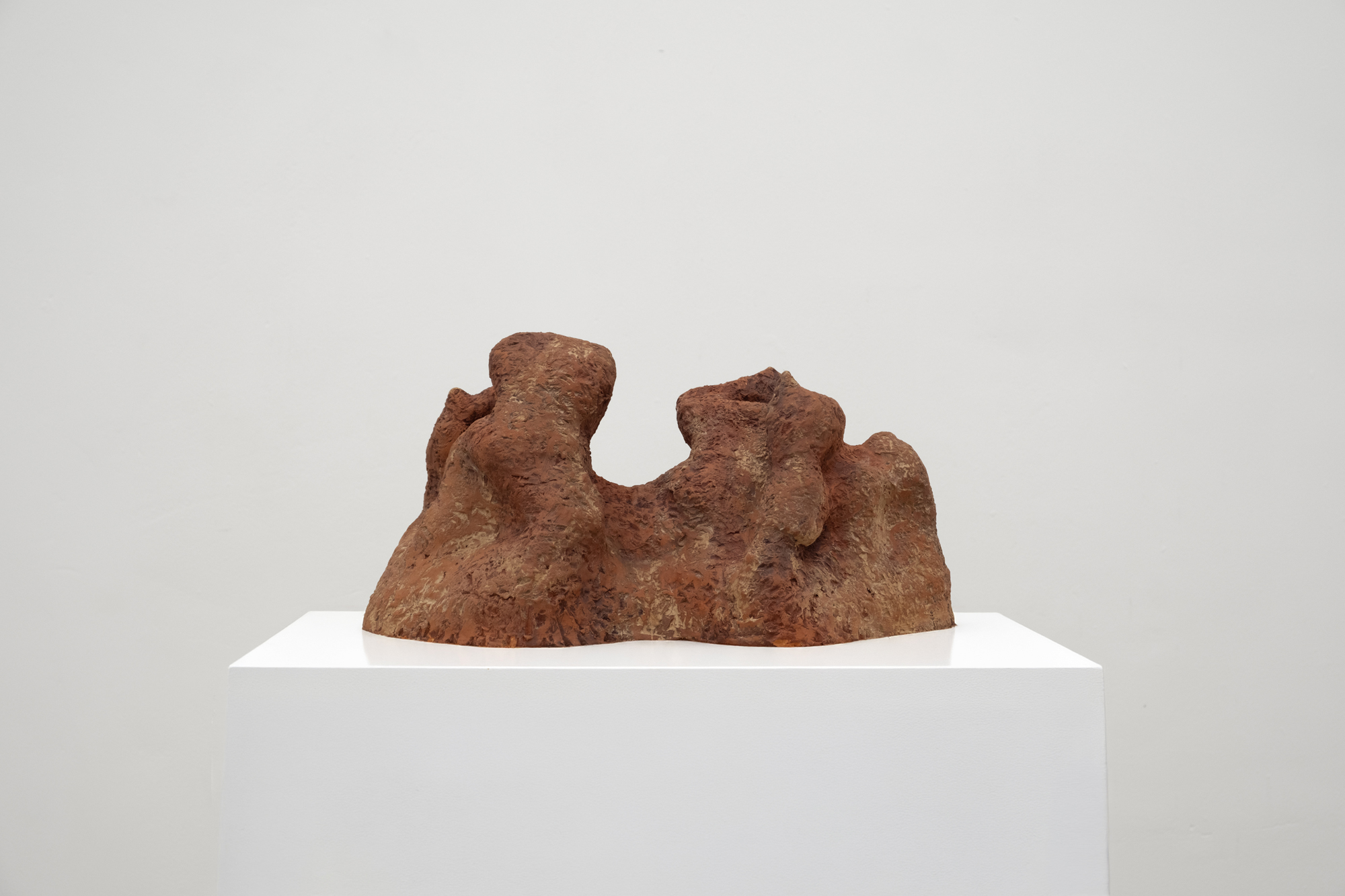
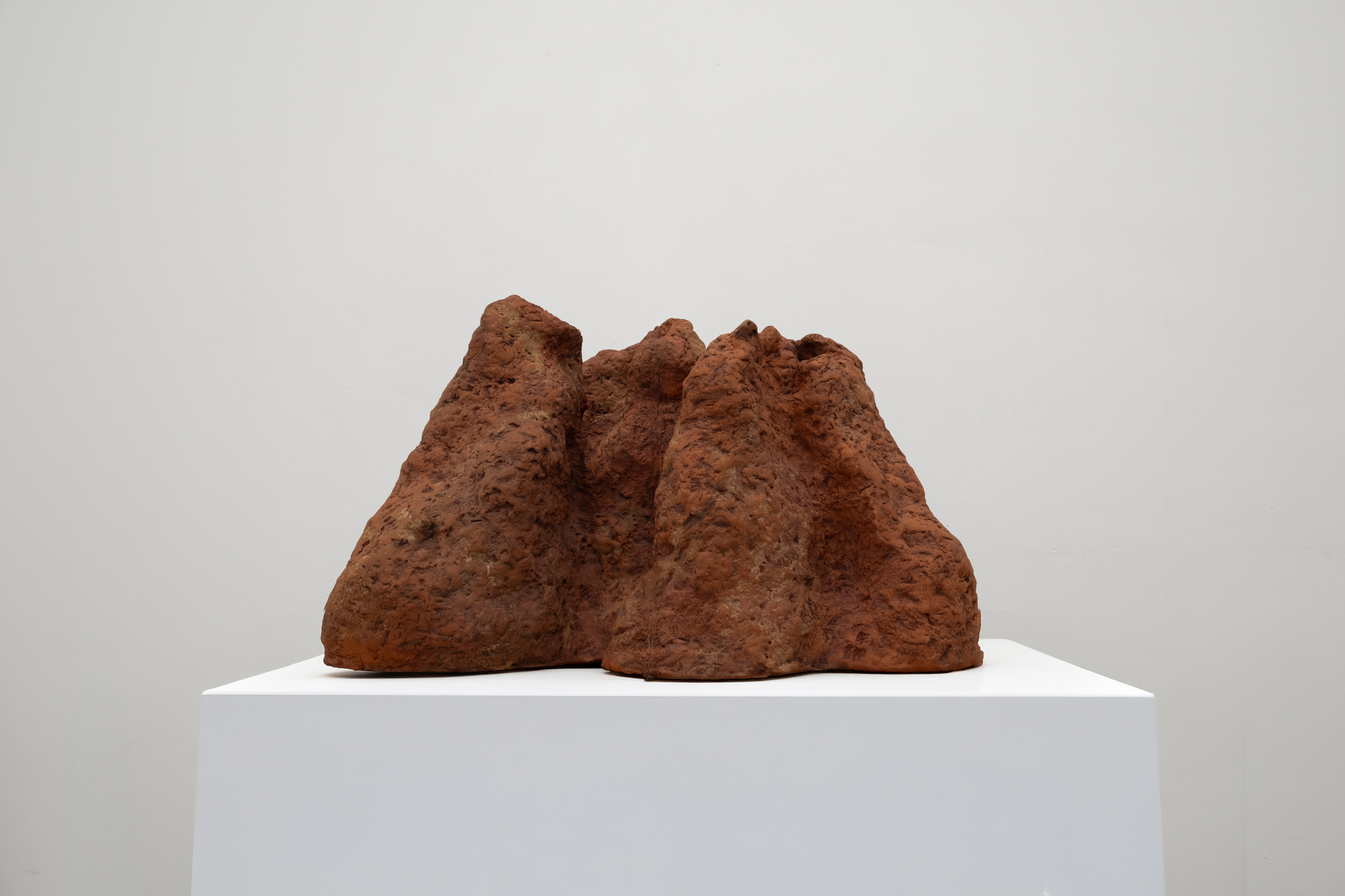
Following these earlier, smaller sketches, Zantsi has begun to scale up, becoming looser, using oil washes on board and smudged pastels on paper to produce visions that are as hazy as an ant’s are supposed to be. In some cases, Zantsi painted a scene from memory—for instance, in Phantsi komthunzi (2026), a park in Woodstock near his old studio. In other works, like Selimile (2026), the scene is wholly imagined and, therefore, colour-wise, somewhat strange: the sky is a butter yellow, the anthill as blue as a bruise. Like an impressionist, such as Monet—or another master of froth and mist, JMW Turner—Zantsi is an observer, attuning himself to the subtlest fluctuations in light and weather, how these affect the colour and texture of the land. What this begets is work that is, at once, mystical and familiar. Following the success of the Iya embovaneni vila ndini exhibition, Zantsi has continued to develop his technique. For one thing, he has taken inspiration from the installation that formed part of the exhibition—a mound of soil in the form of an anthill, bedecked with totems, offerings, like fruits and flowers—and collaborated with ceramicist. First, he dilutes oils—subtle greens, greyish purples, oaky yellows, brown and red midtones—then applies these washes to the canvas. He lets the elements manifest their will on the composition: the paint drips, spreads, and blends as it dries, varying according to time and temperature. Zantsi watches the canvas, “finding rather than producing the image,” as Vela Projects director Jonathan Goschen puts it. As he watches, a landscape appears: a mountain path, an anthill, a figure, a horizon at the top of the canvas. He then adds or removes pigment to bring the vision of the landscape to life, always smudging or blurring the outlines to produce an atmospheric feeling. He calls his “spacious image making,” an intuitive, open-hearted, and, dare I say, magical way of producing a landscape.
When we think of the landscape painting tradition in South Africa, who comes to mind? For me, my biases notwithstanding, it’s Pierneef. When I was in university, I often heard Pierneef criticised for his romantic view of the South Africa landscape— its swirling clouds, majestic trees, and spectacular sunsets—which reinforced a colonial view of the land as uninhabited, tameable and, to put it crudely, up for grabs. As Sean O’Toole writes in an essay called “Landscape Not Empty,” Pierneef “rendered the world as a quiet, unhurried, sometimes awkwardly lifeless place. In other words, he made a good propagandist.” I tend to have a more forgiving view of Pierneef’s work, in part because, like an impressionist, he dares to return, again and again, to the afternoon light—the sandstone face of the mountain shot through with pink, its shadows deeply purple—humbling himself before it. I see this same light in Zantsi’s painting, Lakutshona ilanga (2026). The scene is a forest at dusk, the trees veiled in the shadow of dusk. Above them, we see the sky at twilight: a gentle blend of peach, mauve, and periwinkle. In some areas, this light strikes through the branches. It is a small work—you could hold each of the two boards that make up its panels in each of your hands—nevertheless, it envelops one. Memories of sunsets seen appear at the fore of one’s mind, as does a whisper of the painting’s namesake song, “Ndakucinga ngawe lakutshn’ ilanga,” or, in English, “I will think of you when the sun sets.” It reminds me of this stanza from Stephen Watson’s poem “Afternoon Light in April”:
It is a light each year erased, and even now returning.
It is the light of memory, crystallising, once more recalling
what was razed by other days, the other time in which all live:
that your final fear was not for you, that your final word
is not for you, for another time, another light, beyond you.
It is the “light of memory,” which fleets, and yet withstands. It is the light that
belongs to the past—your memories, your father’s memories, and his father’s, and his
father’s. It is also the light that belongs to the future—”another time, another light,beyond you.”
This light cannot be claimed. It belongs to no one. Therefore, it belongs to all of us. This is the work of Iya embovaneni vila ndini: to see as an ant sees—that is, to see the world not as a place to be captured, documented, tamed, and owned, but as it is: its wounds and its possibilities, all bound together in a light that strikes from beyond time. To see the world’s timelessness. To listen to its breath, which flows through all things. This is what Zantsi seems to say: “Light the fire, and I’ll show you something"